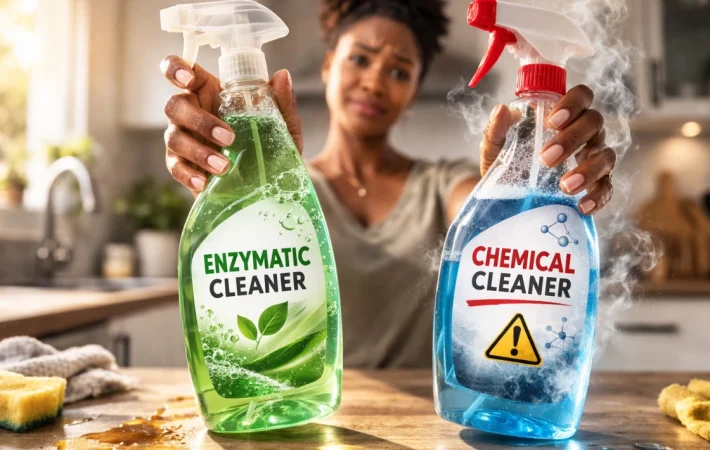
Enzyme Cleaner vs Chemical Cleaner

Enzyme Cleaner vs Chemical Cleaner: Which One Is Better?

If you’ve ever stood in a shop aisle staring at labels and wondering what’s actually better, you’re not alone. The debate around enzyme cleaner vs chemical cleaner usually comes down to three things: results, safety, and long-term impact. And the truth is—both can “clean”, but they don’t work the same way at all.In this guide, we’ll break down the real differences between an enzyme cleaner vs chemical cleaner, explain when each one makes sense, and help you choose the best option for your home (especially if you care about health, pets, kids, and the environment).

What’s the Difference Between an Enzyme Cleaner vs Chemical Cleaner?

The easiest way to understand enzyme cleaner vs chemical cleaner is to look at how each one removes dirt.

Enzyme cleaners

Enzyme cleaners use natural enzymes (and often beneficial bacteria) to break down organic mess—things like:
  • Grease and food residue
  • Sweat and body oils
  • Urine and other bathroom odours
  • Organic stains
  • Drain buildup caused by gunk
Instead of “burning” grime off surfaces, an enzyme cleaner works by digesting the mess and reducing the source of odours.

Chemical cleaners

Chemical cleaners usually work by using stronger chemical reactions to:
  • Dissolve grease fast
  • Bleach or disinfect surfaces
  • Strip stains
  • Kill germs quickly
They can be effective, but many are also harsh—especially when used often, mixed incorrectly, or used in small, poorly ventilated spaces.

How Enzyme Cleaners Work (In Plain English)

An enzyme cleaner is like sending tiny “workers” to eat the mess. Each enzyme targets specific organic material. That’s why enzyme cleaners are excellent for:
  • Kitchens (oils, food spills)
  • Bathrooms (odours, residue)
  • Laundry (sweat, stains)
  • Drains (organic buildup)
A big advantage in the enzyme cleaner vs chemical cleaner debate is that enzyme cleaning can keep working after you apply it—especially on odours and buildup—because it’s breaking down the source, not just masking it.

How Chemical Cleaners Work (And Why They Feel “Stronger”)

Chemical cleaners often feel more powerful because they can act fast and give that instant “sterile” smell. Some also disinfect aggressively.But in the enzyme cleaner vs chemical cleaner comparison, “stronger” doesn’t always mean “better” for daily use. Strong chemical cleaners may:
  • Irritate skin or trigger allergies
  • Leave harsh residues
  • Damage sensitive surfaces over time
  • Create toxic fumes (especially in bathrooms)
And very importantly: some chemical cleaners are dangerous when mixed (like bleach + ammonia-type products). It’s one reason many homes are moving toward safer routine cleaning options.

Enzyme Cleaner vs Chemical Cleaner: Which Cleans Better?

This is the question everyone
Going Green shouldn't be just Lip Service

Going Green Shouldn’t Be Just Lip Service: Why Real Sustainability Matters

“Going green” is everywhere — but without real operational changes, it’s just marketing. This post breaks down why sustainability claims must be specific, provable, and tied to how products impact people and water systems. We also look at how enzyme-powered cleaning can deliver performance while reducing unnecessary harshness, and what “real” green looks like in practice.
eco-friendly mortuary cleaning products

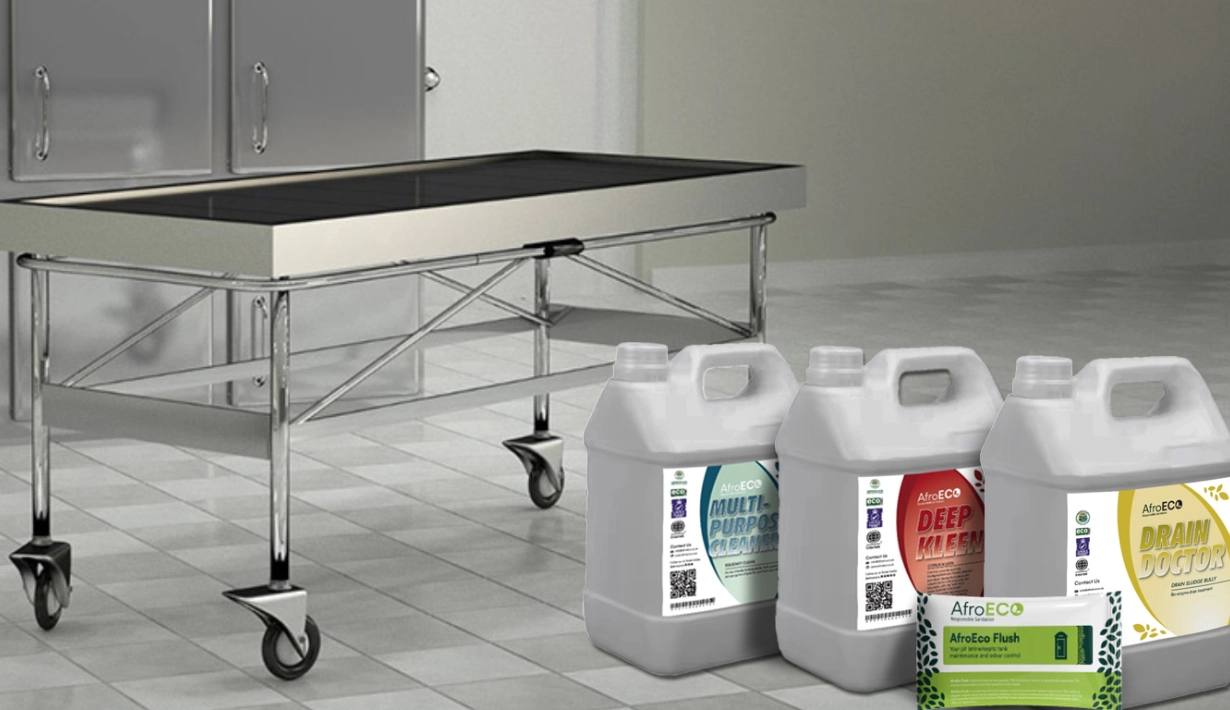
Why Mortuaries Need Eco-Friendly, Professional-Grade Cleaning Products

Mortuaries need cleaning solutions that are serious about hygiene—without putting staff at risk from harsh chemical fumes or corrosive residues. This post explains why switching to eco-friendly, professional-grade cleaners is a smarter way to keep preparation areas, floors, and high-touch surfaces sanitary, while supporting a safer work environment and more responsible waste practices.
AfroECO deep-cleaning solution

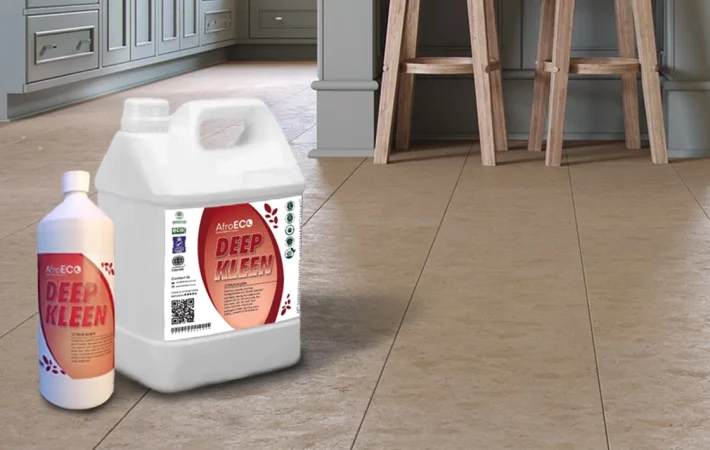
Deep-Cleaning Made Safe: How AfroECO Deep Kleen Tackles Tough Grime Without Harsh Chemicals

Deep cleaning doesn’t have to mean harsh fumes, corrosive chemicals, or damaged surfaces. In this post, we break down how AfroECO Deep Kleen delivers professional-grade results with a biodegradable, non-toxic, gel-based formula that clings longer, lifts stubborn grime (grease, oil, scale, rust, and mineral deposits), and stays safer for people, pets, and the planet.
WHO guidelines on sanitation and health

Sanitation and Health: Why Safe Systems Save Lives

In many parts of the world, basic sanitation is still a luxury—and the consequences are deadly. This post unpacks the WHO’s guidelines on sanitation and health, explaining what makes a system truly safe, how it protects communities, and what roles governments, businesses, and citizens must play in creating sustainable, life-saving infrastructure.

Search for products

Back to Top
Product has been added to your cart
Compare (0)